Herman Miller Aeron vs Steelcase Leap: Fit First
Compare the Herman Miller Aeron and Steelcase Leap by seat feel, sizing, depth, recline, arms, lumbar controls, warranty and used-chair inspection points.
What to know first
- Neutral, supported positions matter more than perfect posture.
- Movement throughout the day is part of the setup.
- Persistent pain deserves advice from a qualified clinician.
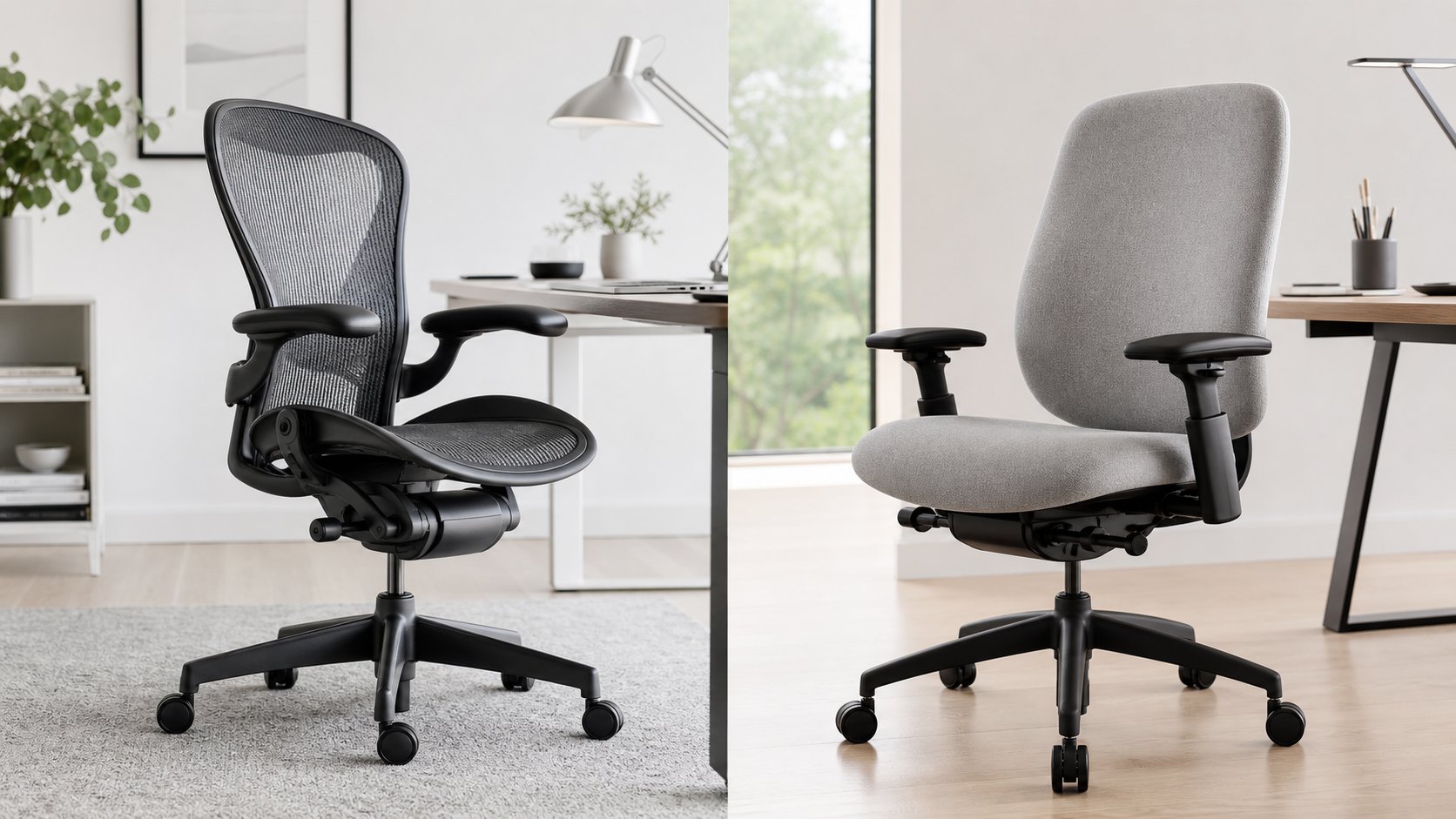
Choose the Herman Miller Aeron if you prefer a taut suspended seat, know which of its three sizes fits and value a breathable, precisely bounded sitting position. Choose the Steelcase Leap if you prefer an upholstered flexible seat, adjustable seat depth and one standard model that accommodates a wider range of positions.
Neither chair is universally more ergonomic. The rigid edge of an incorrectly sized Aeron can be a deal-breaker, while the Leap’s foam, flexible back and more conventional seat feel will not suit everyone. Sit in both for at least one normal work session before treating the purchase as final.
RemoteNest has not lab-tested these chairs. This comparison uses current US manufacturer specifications and controls; options, fabrics, warranties and capacities vary by country and purchase channel.
Quick comparison
| Feature | Herman Miller Aeron | Steelcase Leap |
|---|---|---|
| Seat | 8Z Pellicle suspension | Upholstered foam with flexible edge |
| Fit system | Three sizes: A, B and C | One standard size; Leap Plus separate |
| Seat depth | Fixed within each Aeron size | Adjustable |
| Back support | PostureFit SL or lumbar options by configuration | LiveBack, lumbar height and lower-back firmness |
| Arms | Height-adjustable or fully adjustable options | Common current configuration has 4D arms |
| Recline | Tilt limiter and forward tilt by option | Natural Glide with recline stops and tension |
| Published US capacity | 300 lb A; 350 lb B; 400 lb C | 400 lb standard current listing |
| Current US warranty | 12 years, terms apply | 12 years, terms apply |
Aeron is better when the size is right
Herman Miller sells the Aeron in A, B and C sizes with different seat dimensions and capacity ratings.
What works
- Suspended seat and back allow airflow.
- Three shells provide more deliberate body-size matching.
- Tilt can feel fluid when tension and limiter are set correctly.
- Components and used inventory are widely available.
- Current direct purchases carry a long manufacturer warranty.
What may not work
- Seat depth is not adjustable within a size.
- The frame creates a defined sitting area.
- Cross-legged or one-leg-tucked sitting can press against the edge.
- Fully adjustable arms, PostureFit SL and forward tilt depend on configuration.
- Choosing size B by popularity rather than fit can produce the wrong seat.
Leap is better for position variety
Steelcase’s current Leap uses an upholstered seat, adjustable seat depth, flexible back and separate lower-back firmness control.
What works
- Seat depth can adapt without changing the whole chair size.
- Flexible front edge is less restrictive for varied leg positions.
- Arms adjust across height, width, depth and pivot in common configurations.
- The back changes shape as the user moves.
- Published capacity is high for the standard model.
What may not work
- Upholstery feels warmer than open suspension.
- Cushion feel changes with material, age and refurbishment quality.
- Numerous controls take time to understand.
- A single standard shell does not guarantee fit at body-size extremes.
- The seat and back move differently from a conventional synchronized chair.
Compare seat feel first
Aeron suspension
The Pellicle seat distributes load without a foam cushion and keeps air moving. The surrounding frame is part of the fit. A user should not feel forced against the front or side edge in normal positions.
Leap upholstery
The Leap’s cushion and flexible edge feel more familiar. The adjustable depth allows a gap behind the knees while preserving thigh support. Very soft or replacement foam can change the intended relationship with controls and arm height.
There is no objective winner. Wear normal clothing and test the chair through focused work, calls and reclined reading.
Size and seat-depth decision
Herman Miller’s current US specifications list approximately:
| Aeron size | Seat depth | Seat height | Capacity |
|---|---|---|---|
| A | 16 in | 14.75–19 in | 300 lb |
| B | 16.75 in | 16–20.5 in | 350 lb |
| C | 18.5 in | 16–20.5 in | 400 lb |
Use the current Herman Miller size chart where height and weight overlap. Also test shoulder width, seat-edge contact and calf clearance.
Steelcase publishes adjustable seat depth and a standard 16- to 20.5-inch seat-height range on the current US Leap. That adjustability helps households with two users, but each person must still fit the back, arm range and base.
Capacity is not the same as fit. A chair can support a stated load while being too narrow, deep or tall.
Back and lumbar controls
Aeron
Configuration determines whether the chair has PostureFit SL, adjustable lumbar or basic support. PostureFit SL uses sacral and lumbar pads whose combined position differs from a simple height-adjustable bar.
Leap
The LiveBack system flexes with the spine. An adjustable lumbar element changes vertical location, while a separate lower-back firmness control changes resistance.
More lumbar pressure is not automatically better. Start with modest support, sit fully back and reduce any pressure that creates a hard focal point.
Use the complete ergonomic setup guide rather than turning every control to maximum.
Recline behavior
Aeron’s tilt pivots the suspended seat and back as a system. Optional forward tilt supports a slightly forward position but should not force the user to hold tension.
Leap’s Natural Glide allows the seat to move as the user reclines, helping the eyes and hands stay near the work zone. Recline stops restrict range rather than holding every precise angle.
Test whether you can:
- Recline without feet lifting
- Return upright without abdominal effort
- Reach the keyboard in a mild recline
- Stop at useful intermediate positions
- Change position without the chair surprising you
Armrests
Both chairs can have highly adjustable arms, but used and base configurations vary.
Aeron arm options may include height adjustment plus depth and pivot. Leap’s 4D arms commonly move in height, width, depth and pivot.
Set the pads low enough that shoulders remain relaxed. If the arms hit the desk and prevent close approach, either lower them or reconsider the desk height. Arm range is a compatibility measurement, not a feature-count contest.
Heat, clothing and maintenance
Aeron’s open suspension allows airflow and has no seat foam to compress. Dust can collect around the frame and mesh attachments.
Leap fabric choices affect warmth, texture and cleaning. Foam and upholstery are wear components, especially in an older or heavily used chair.
Review approved cleaning instructions. Solvents, steam and aggressive scrubbing can damage performance materials.
New versus used
These chairs are common on the refurbished market. A used chair can be excellent value, but the original manufacturer’s warranty may not transfer and replaced parts may differ from factory specifications.
Used Aeron checklist
- Confirm A, B or C using the size markers and label.
- Identify Classic versus current Remastered generation.
- Inspect Pellicle for tears, looseness and edge separation.
- Test cylinder, tilt tension, limiter and forward tilt.
- Check arm locks and PostureFit components.
- Inspect caster and base damage.
Used Leap checklist
- Confirm generation and manufacture label.
- Move seat depth through its full range.
- Test recline stops and tension.
- Adjust every arm direction.
- Inspect foam, fabric and seat-pan shape.
- Check lumbar slider and firmness control.
Do not assume “open box,” “renewed” and “factory refurbished” mean the same thing. Ask who provides the warranty, for how long, and which parts were replaced.
Warranty comparison
Both manufacturers advertise 12-year coverage on current direct US purchases, subject to warranty terms, product configuration, use and original-purchaser requirements.
Before ordering, save:
- Product configuration
- Seller identity
- Warranty document
- Return-window terms
- Delivery and restocking charges
- Receipt and serial label
A marketplace seller’s policy does not replace the manufacturer warranty. International terms can differ.
Fit test before buying
Use the footrest and chair fit worksheet and spend 30–60 minutes in each finalist if possible.
- Set seat height for the desk and keyboard.
- Set seat depth with clearance behind the knees.
- Sit fully against the back.
- Use low-to-moderate lumbar support.
- Lower arms until shoulders relax.
- Recline and return several times.
- Type and use the pointer for 15 minutes.
- Try normal alternative sitting positions.
- Check edge pressure, warmth and movement.
- Repeat near the end of the day.
A showroom’s thick carpet, high desk and brief trial can hide compatibility problems.
Which should you choose?
Choose Aeron if
- One of the three shells fits cleanly.
- You like taut suspension.
- Airflow is a high priority.
- You sit mostly within a defined centered position.
- The selected configuration includes the controls you need.
Choose Leap if
- Adjustable seat depth matters.
- You change leg position often.
- You prefer an upholstered seat.
- Broad arm movement is useful.
- Two similar-size users will share one chair.
Choose neither if
- Neither chair reaches the necessary seat height.
- The arm range conflicts with the desk.
- You need a headrest approved by the manufacturer and configuration.
- A clinician has specified different support.
- The return policy is too restrictive for a real trial.
Final verdict
Aeron wins on sized suspension, airflow and a distinctive controlled sitting experience. Leap wins on adaptable seat depth, forgiving upholstery and position variety. Their similar premium warranties do not make their fit interchangeable.
Do not buy the logo or the most popular size. Test the exact configuration, verify desk clearance and use the return window as a structured work trial. The better chair is the one that supports position changes without a hard edge, unreachable control or desk conflict.