Best Ergonomic Office Chairs Under $500: 6 Options
Compare six office chairs commonly sold below $500 by seat range, lumbar support, arm adjustment and warranty, then use a fit-first checklist before ordering.
What to know first
- Neutral, supported positions matter more than perfect posture.
- Movement throughout the day is part of the setup.
- Persistent pain deserves advice from a qualified clinician.
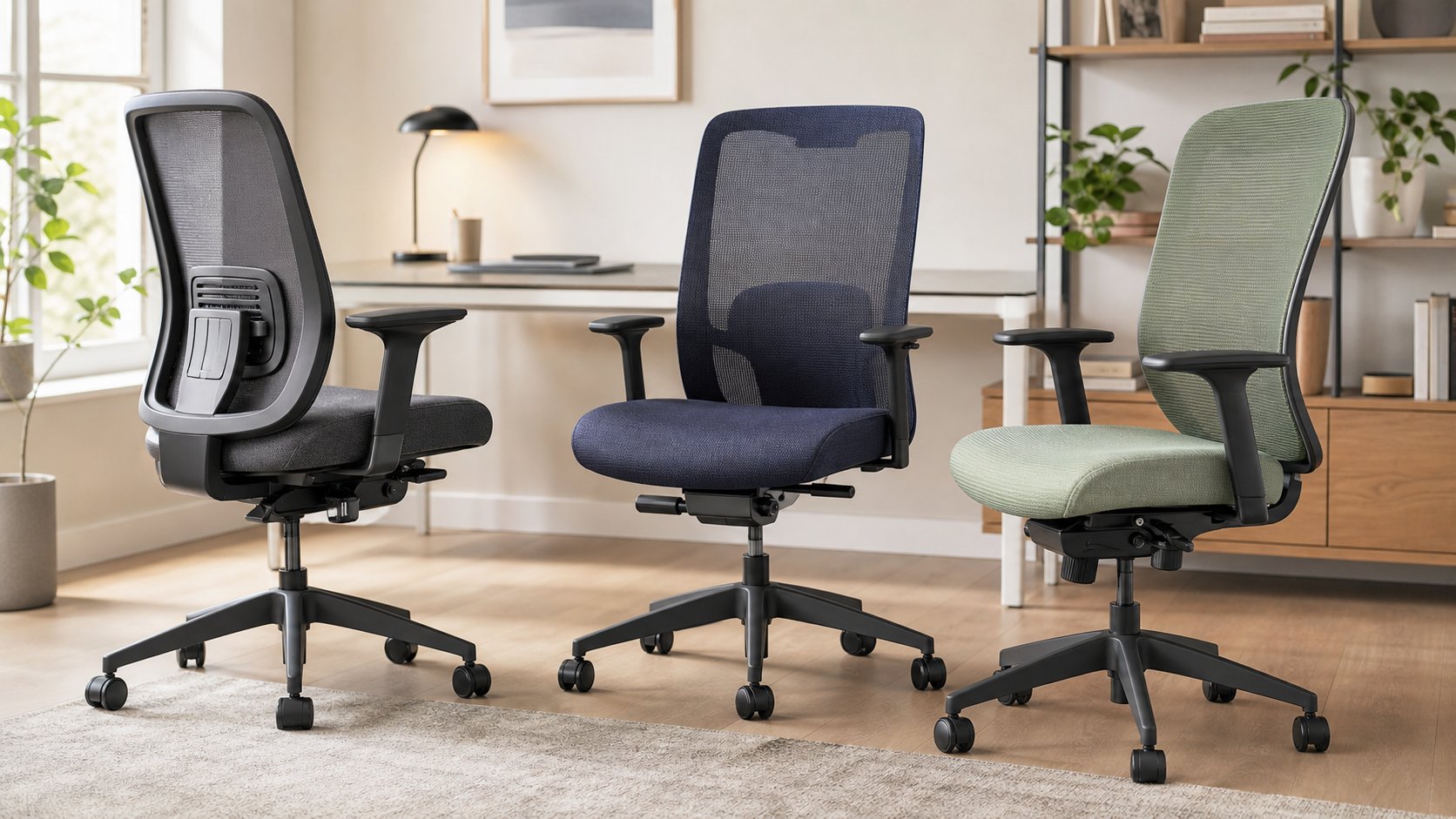
The best ergonomic office chair under $500 is the one whose seat-height and seat-depth ranges fit your body, whose arms can clear the desk, and whose return policy gives you enough time to test it. Haworth Breck is a strong fit-first option with standard seat-depth adjustment. Branch’s Ergonomic Chair offers broad controls for less, while the Ergonomic Chair Pro sits at the top of the budget with more adjustable arms and lumbar support.
Prices change by color, configuration, delivery region and sale. Every chair below was listed at or below $500 in at least a common US configuration when this guide was updated, but taxes, shipping and optional headrests can move the total above the limit. RemoteNest has not performed standardized chair testing, so these are specification-based candidates—not universal comfort rankings.
Quick picks
| Chair | Best for | Notable published adjustment | Main caution |
|---|---|---|---|
| Haworth Breck | Broad fit range and warranty | Seat depth, lumbar, 4D arms | Weight-activated recline offers less manual tuning |
| Branch Ergonomic Chair | Balanced value | Seat depth, lumbar height, 3D arms | 275 lb published capacity |
| Branch Ergonomic Chair Pro | Maximum controls near $500 | Two-way lumbar, 5D arms, forward tilt option | Price ceiling leaves no room for add-ons |
| HON Ignition 2.0 | Configurable commercial chair | Synchro-tilt; configuration-dependent lumbar and arms | Model codes materially change features |
| IKEA JÄRVFJÄLLET | Tall back and accessible showroom | Seat depth, lumbar and headrest | Fixed styling and firm feel will not suit everyone |
| Staples Dexley | Lower-cost mesh option | Seat height, arms and recline | Fewer precise adjustments and shorter service expectations |
1. Haworth Breck: best all-around specification
The Haworth Breck publishes a 15.5- to 20.5-inch seat-height range, 15- to 17.25-inch seat-depth range and 325-pound capacity. Height-adjustable lumbar, 4D arms and a three-position backstop are standard on the current direct-store version.
Best for: users who want a broad seat range and commercial brand support without configuring every component.
Strengths: useful dimensions, adjustable seat pan, flexible back and a long manufacturer warranty.
Trade-offs: the weight-activated recline reduces manual tension decisions but may not feel right to someone who prefers a precisely dialed resistance. The seat-depth maximum should be checked by taller users.
2. Branch Ergonomic Chair: best balanced value
The Branch Ergonomic Chair includes seat height and depth, tilt and tension, height-adjustable lumbar and 3D armrests. Branch lists a 17- to 21-inch seat-height range, a 275-pound capacity and seven-year warranty.
Best for: a conventional foam-seat, mesh-back chair with more adjustment than entry-level retail models.
Strengths: adjustable seat pan, lumbar height and arms at a midrange price; optional headrest for users who confirm they need one.
Trade-offs: the published capacity and dimensions may exclude some bodies. The headrest costs extra and should not be bought before confirming that it reaches the head without pushing it forward.
3. Branch Ergonomic Chair Pro: most adjustable near the limit
The Branch Ergonomic Chair Pro is commonly listed at the $500 threshold. Branch specifies 14 adjustment points, 5D arms, seat depth, height-and-depth-adjustable lumbar, and an optional forward seat tilt.
Best for: users whose shoulder width or preferred arm position makes basic armrests difficult.
Strengths: unusually adjustable arms, two-way lumbar and a standard or tall cylinder choice.
Trade-offs: the base configuration consumes the whole budget. Upholstery, headrest, tall cylinder or delivery can change the total. More controls also require a careful initial setup rather than constant random adjustment.
4. HON Ignition 2.0: best configurable commercial option
The HON Ignition 2.0 is a family rather than one fixed chair. Mesh-back task configurations can include advanced synchro-tilt, height-and-width-adjustable arms and adjustable lumbar support.
Best for: buyers who can verify a complete model code through an authorized seller.
Strengths: commercial seating lineage, several upholstery and control choices, and a recline mechanism designed for movement.
Trade-offs: two listings that both say “Ignition 2.0” can have different lumbar, seat-slide, arm and caster options. Decode the full SKU and request the specification sheet before comparing price.
5. IKEA JÄRVFJÄLLET: best try-before-buy option
The IKEA JÄRVFJÄLLET combines a high mesh back with adjustable seat depth, lumbar support, headrest and arms on current regional versions.
Best for: shoppers with access to a showroom who prefer a tall back.
Strengths: widely accessible physical locations, multiple core adjustments and a restrained design.
Trade-offs: regional versions and upholstery differ. The seat and lumbar feel can be firm, and the headrest position is not ideal for every torso. Test it in a normal working posture rather than reclining for two minutes in the store.
6. Staples Dexley: best lower-cost starting point
The Staples Dexley mesh task chair is a lower-priced all-mesh chair with adjustable seat height, arm height and recline controls.
Best for: a constrained budget where basic fit is confirmed in person.
Strengths: price, broad retail availability and breathable seat construction.
Trade-offs: fewer precise controls than the chairs above, a seat shape that will not fit everyone and more limited long-term component expectations. Retail assembly and warranty service should be checked locally.
Measure before comparing comfort claims
Chair comfort is personal, but fit can be screened with measurements.
Seat height
Measure from the floor to the crease behind the knee while wearing normal work shoes. The chair should allow feet to rest on the floor with thighs supported and without pressure under the knees. If the desk forces the seat higher, add a stable footrest rather than leaving the feet unsupported.
Seat depth
Sit fully against the backrest. Aim for a small clearance behind the knee—often described as roughly two or three finger widths—without sacrificing thigh support. A seat slider is especially useful when several people share the chair.
Seat width and arm spacing
Check the usable space between arms, not only the overall chair width. Arm pads should support the forearms lightly without pushing the elbows outward.
Desk clearance
Measure the desk underside, apron and keyboard tray. Armrests that collide with the desk can force the chair too far back.
Use the input and seating fit checklist to record settings and test results.
Adjust the chair in the right order
- Set seat height so the feet are supported.
- Adjust seat depth while maintaining back contact.
- Place lumbar support in the lower-back curve without aggressive pressure.
- Set recline tension or weight response so movement feels controlled.
- Lower armrests until shoulders relax.
- Bring the keyboard and mouse close.
- Position the monitor last.
The chair cannot compensate for a keyboard that is too high or a screen off to the side. Use the complete ergonomic home-office guide for the whole system.
What “ergonomic” does not guarantee
“Ergonomic” is not a protected promise of comfort or pain relief. Useful evidence includes:
- Published dimensional ranges
- Independent safety or emissions certifications
- Replaceable components
- Clear warranty exclusions
- A realistic return window
- Accessible adjustment instructions
A dramatic lumbar pad or thick headrest is not automatically beneficial. Support should help maintain a comfortable range of positions, not force one rigid posture.
Mesh versus foam
Mesh back, foam seat
This common combination provides airflow behind the torso and a predictable seat cushion. Foam density and edge shape affect long-session comfort but are rarely comparable across brands.
All mesh
Mesh can distribute pressure well when tension and frame shape fit the user. A hard frame near the thighs or shoulder blades is a warning sign. Mesh does not mean maintenance-free; inspect tension and clean it according to instructions.
Upholstered back and seat
Fabric can feel warmer and visually softer. Look for durable commercial upholstery and check whether covers or cushions are replaceable.
No material is inherently more ergonomic.
Used commercial chairs can be better value
A professionally refurbished Steelcase, Haworth or Herman Miller chair can provide more adjustment and parts support than a new budget chair. Check:
- Seller identity and refurbishment process
- Gas cylinder and caster replacement
- Cracks around the base and back frame
- Arm-pad condition
- Tilt and lock operation
- Correct size, especially for Aeron models
- Return freight and warranty
Read the secondhand office-gear checklist before buying from a marketplace.
Return-window test
Test the chair through ordinary work, not a marathon designed to prove the purchase.
- Use it for several normal days.
- Keep settings stable for at least one work block.
- Note pressure, heat, reach and shoulder position.
- Check whether the recline encourages movement.
- Confirm feet remain supported.
- Recheck at the end of the day.
Keep packaging until fit is clear. Large-chair return shipping can erase the apparent saving.
Persistent numbness, weakness or pain deserves assessment from a qualified health professional. A new chair is not a diagnosis or treatment.
Final recommendation
Start with Haworth Breck when its published seat range fits, Branch Ergonomic Chair for balanced value, and Branch Pro when advanced arm and lumbar controls justify spending the full $500. Choose HON Ignition 2.0 only after decoding the configuration, IKEA when an in-store fit test is possible, and Dexley for a basic lower-cost option.
Buy by dimensions, adjust in sequence and preserve the return option. The best chair under $500 is not the model with the longest feature list; it is the one that supports your body and fits the rest of the workstation.