White Desk Setup Ideas: 18 Clean Workspaces That Still Feel Warm
Create a white desk setup that feels calm rather than clinical with 18 practical layouts, color palettes, lighting choices and cable-management ideas.
What to know first
- Start with the work you do, not the look you want.
- Protect clearances before choosing furniture.
- Spend first on items you touch for hours each day.
A white desk setup reflects light, reduces visual weight and fits easily into a bedroom or living room. The risk is not that white looks boring. It is that a staged all-white workspace can become impractical: visible cables, screen glare, stained surfaces and nowhere to put the tools real work requires.
These 18 ideas keep the clean aesthetic while adding warmth, contrast and usable storage. Start with the room and workflow, then choose a palette. Do not replace reliable equipment simply to make every object match.
1. White desk with light oak accents
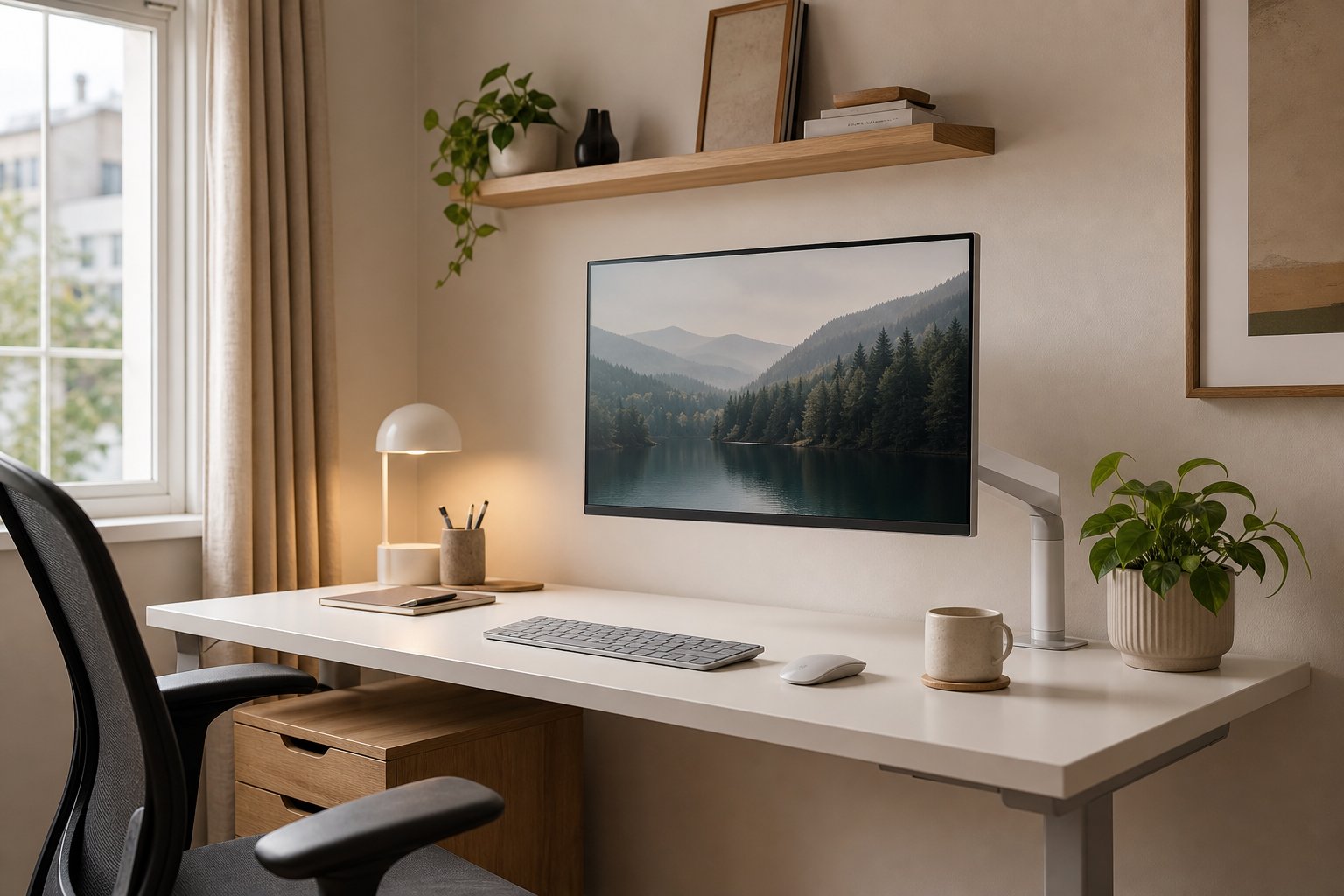
Pair a matte white desktop with an oak monitor shelf, tray or lamp base. The wood introduces texture without making the surface busy.
Keep the palette to white, pale wood and one dark functional color for the monitor and cables. A small amount of contrast makes the screen feel intentional instead of like an interruption.
Best for: Scandinavian-style rooms and shared living spaces.
2. White desk with a black monitor arm
Use a black monitor arm, screen and task light as one visual frame. Dark equipment hides bezels and creates a clear working zone against the white surface.
Route black cables together along the arm and down one rear leg. Do not scatter dark accessories across the whole desk.
Best for: practical equipment that is difficult or expensive to buy in white.
3. Warm-white monochrome setup
Choose cream, ivory and soft gray rather than several bright blue-white finishes. Similar undertones make products from different brands feel more cohesive.
Add a warm dimmable lamp and natural fabric chair to prevent the room from feeling clinical.
Best for: bedrooms and calm evening work.
4. White desk with one rust accent
Use one saturated object—a rust notebook, terracotta planter or muted orange task chair—as the focal point. Repeat the color no more than two or three times.
This creates personality without turning every accessory into decor.
Best for: minimal setups that need warmth.
5. White desk and navy wall
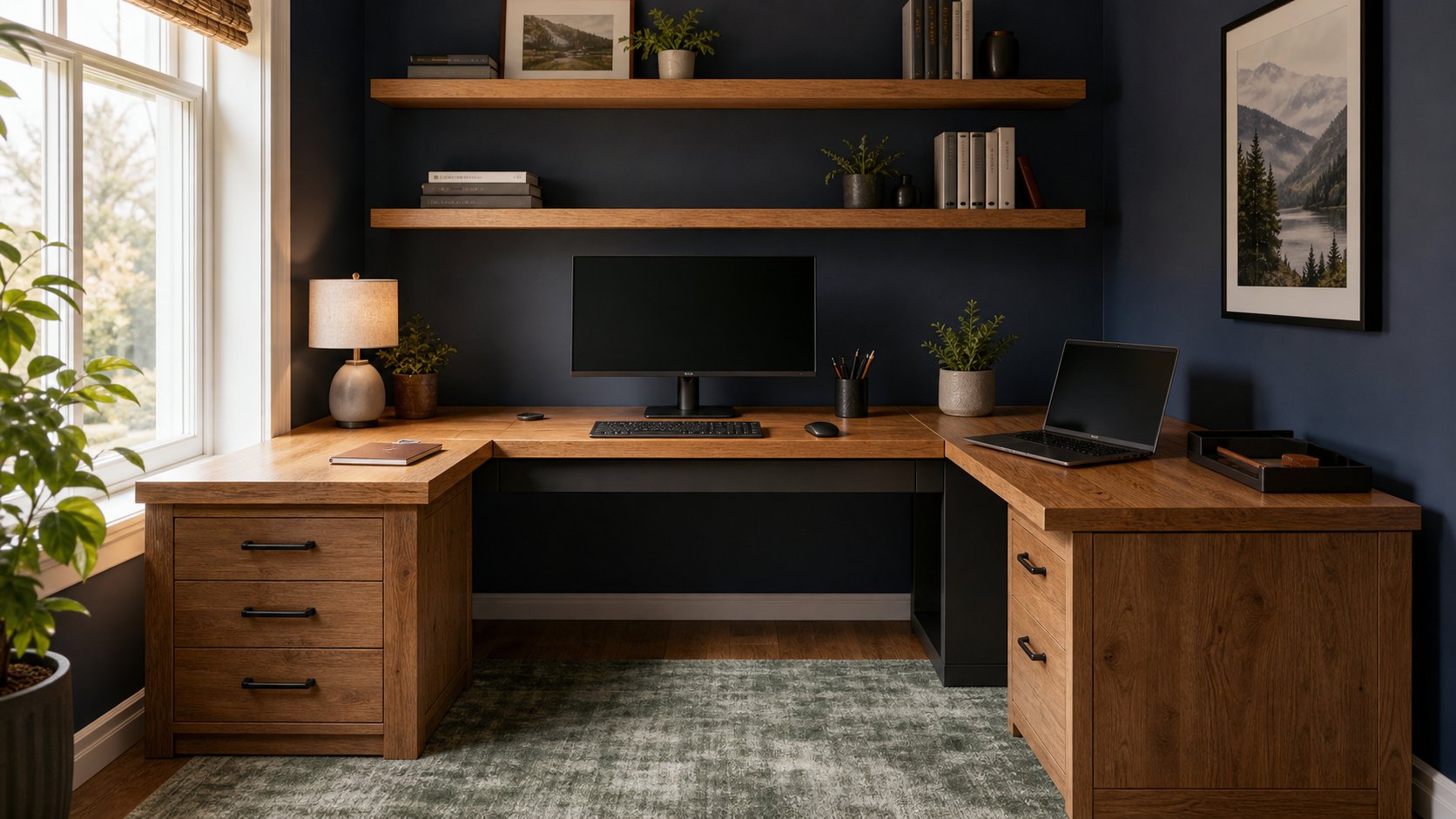
A deep navy or charcoal wall makes a white desk appear crisp and provides a calmer video-call background. Use good room lighting so the monitor does not become the only bright object.
Test a large paint sample at morning and evening before committing. Dark walls change substantially with light direction.
Best for: dedicated offices and camera-facing rooms.
6. White small-space laptop setup
Use a 90- to 110-centimeter white desk, raised laptop, compact keyboard and clamp lamp. Keep storage vertical with a narrow shelf or pegboard.
Choose a chair that fully approaches the desk. A drawer unit on both sides can leave too little knee room.
Best for: alcoves, rentals and studio apartments.
7. White dual-monitor setup
Mount matched displays on one arm or two aligned arms. Keep the monitor bodies dark if that is what you already own; consistent alignment matters more than color.
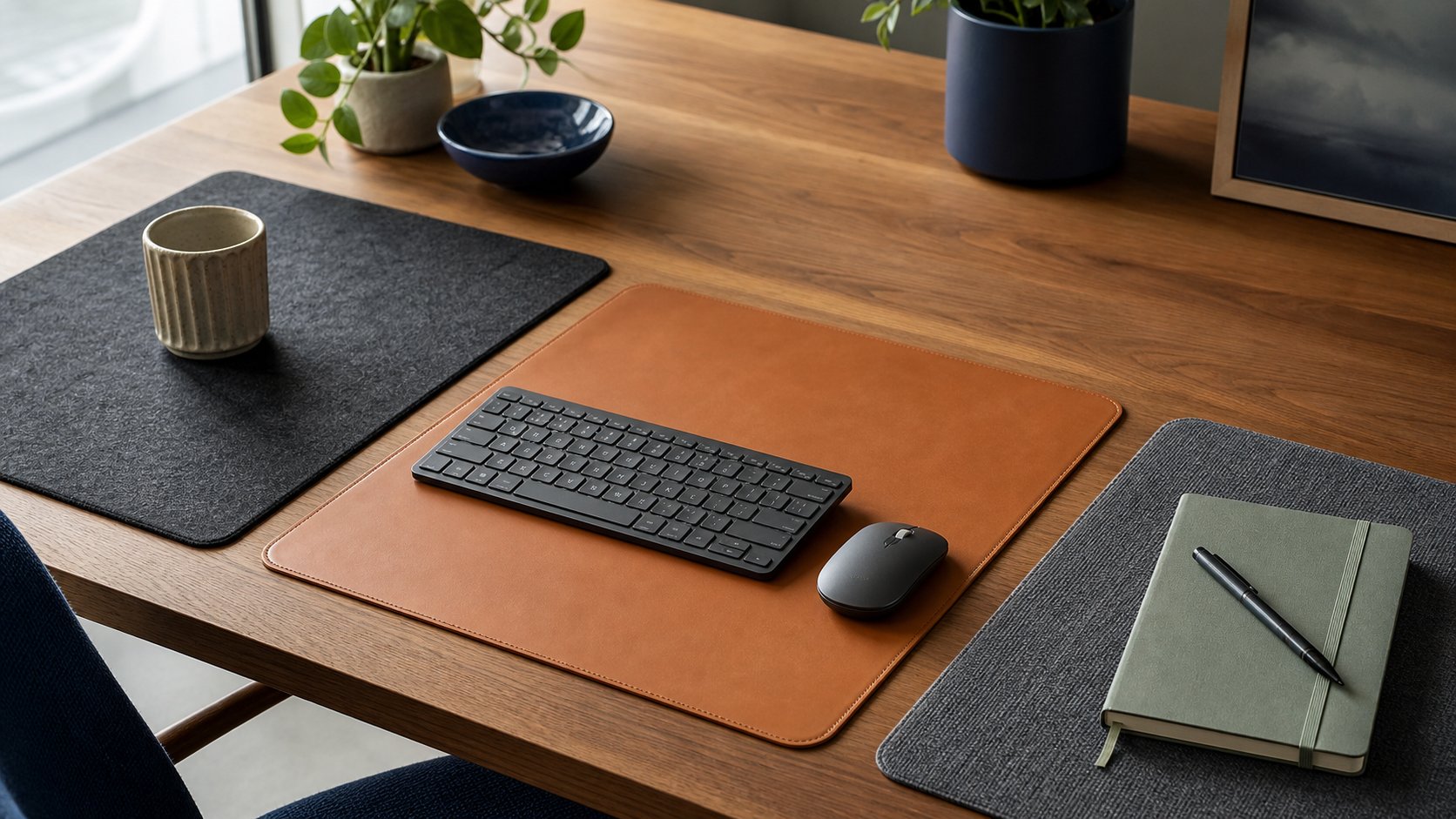
Use a white or light-gray desk mat to define the keyboard zone, then route all display cables into one under-desk tray.
Best for: development, analytics and document comparison.
8. White desk with a vertical monitor
Place the primary landscape screen directly ahead and a vertical secondary display to one side. This reduces horizontal width and creates a purposeful asymmetry.
Use the vertical screen for documents, code or communication. Keep the primary work on the centered display.
Best for: narrow desks and long-form content.
9. White sit-stand desk
A white sit-stand frame visually recedes in a bright room. Mount the power strip, dock and excess cable beneath the moving desktop so only one power run reaches the floor.
Choose a desktop finish with enough texture that fingerprints and small scratches are not constantly visible.
Best for: flexible dedicated workspaces.
10. White desk with closed storage
Pair the surface with one drawer unit or low cabinet. Keep daily supplies in the top drawer, active files below and archive material elsewhere.
Closed storage preserves the aesthetic better than many small desktop organizers. Measure knee clearance before putting drawers under both sides.
Best for: paperwork and equipment that must disappear after hours.
11. White pegboard setup
A white pegboard can hold headphones, cables and light stationery while blending into the wall. Use a small number of larger containers instead of covering every hole.
Keep heavy objects low and follow the wall-mount instructions. Leave the central area behind the monitor visually quiet.
Best for: compact creative tools and rental-friendly modular storage.
12. White desk with soft green accents
Muted sage works with white and pale wood without creating a high-contrast palette. Use it for a chair, pinboard or one shelf rather than many small objects.
Real plants can add the same color, but only where daylight and care needs make sense.
Best for: bright rooms that feel too stark.
13. White creator desk
Give the camera, pen tablet or audio controller a defined docking point. Hide spare batteries and adapters in a labeled drawer.
A white backdrop reflects light, so control exposure during video work and use black flags or curtains when unwanted reflections affect product photography.
Best for: photographers, designers and educators.
14. White desk with a monitor light bar
A light bar preserves the corners of a small white desk. Choose one that directs light onto the work surface rather than the screen.
Add subtle ambient room light behind or beside the monitor. Bright task light on a white surface can otherwise create uncomfortable contrast.
Best for: evening computer work and shallow desks.
15. White corner office
Use a white L-shaped desk only when both wings have a clear job. Center the keyboard and primary monitor on one side; use the second for paper, crafts or temporary equipment.
Avoid aiming the body into the corner while the screen sits permanently to one side.
Best for: mixed digital and physical work.
16. White desk with an upholstered chair
A soft gray, tan or muted-color task chair makes the room feel residential. Choose fit and adjustment before fabric color.
Light upholstery shows wear, so check cleaning guidance and replacement-part availability.
Best for: offices visible from the living area.
17. White desk with transparent accessories
A clear document holder or acrylic riser can reduce visual bulk, but transparent items still occupy space and show dust.
Use one clear component where it improves sight lines. Do not build the whole desk from reflective acrylic beside a bright window.
Best for: very small rooms and floating visual effects.
18. White desk with an end-of-day reset tray
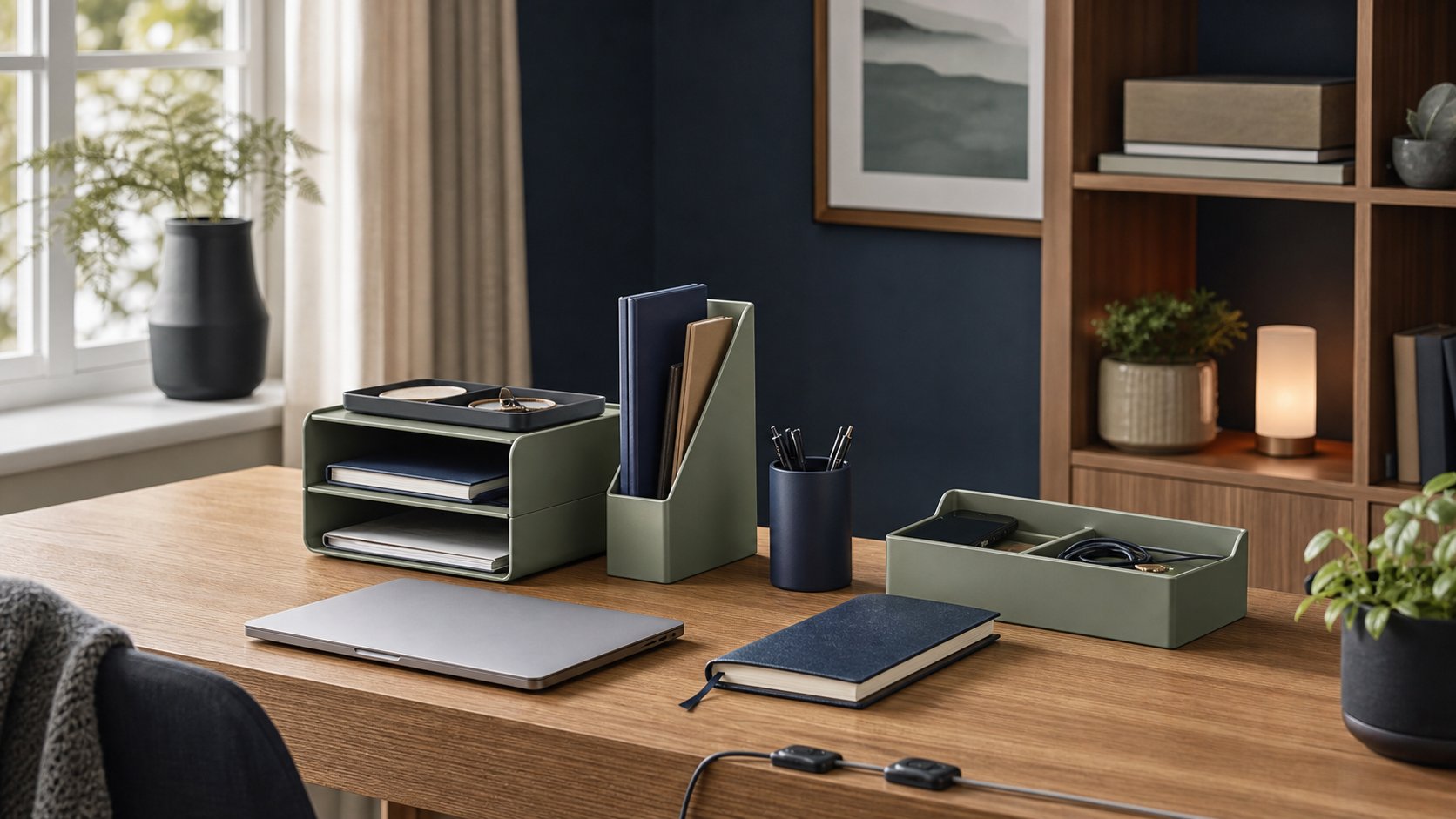
Keep a shallow tray for the notebook, pen, security key and charging cable. At shutdown, collect the active tools and place the tray in a drawer or shelf.
A clean white surface magnifies stray objects. One reset action is more sustainable than trying to maintain perfect order all day.
Best for: shared rooms and people who prefer a clear morning start.
Choose a durable white desktop
Not all white finishes behave the same.
| Finish | Strength | Watch for |
|---|---|---|
| Matte laminate | Affordable and low glare | Edge damage and staining |
| High-pressure laminate | Durable for heavy daily use | Higher price and visible seams |
| Painted wood or MDF | Smooth residential appearance | Chips and moisture sensitivity |
| Powder-coated metal | Strong and easy to clean | Cold feel and scratches |
| Gloss finish | Reflects light and looks crisp | Glare, fingerprints and micro-scratches |
Use coasters and a desk mat where appropriate, but do not cover the entire surface merely to protect it from ordinary use.
Manage glare on a white desk
A bright desktop can reflect a task lamp or window. Position the monitor perpendicular to the window, use a matte surface and aim the lamp across the desk rather than directly downward.
Lower screen brightness only to a comfortable level; do not make the display too dim for the room. In very bright spaces, a medium-tone desk mat can reduce reflected light near the keyboard.
Cable management that blends in
White cable channels can disappear against a white frame, but black power cables may still be the safer supplied option. Group cables by route rather than replacing every cable for color.
Use an under-desk tray, reusable ties and one path down a rear leg. Label both ends before hiding connections. For complete instructions, use the desk cable management guide.
Keep the setup from feeling sterile
Add warmth through one or two of these:
- Wood grain
- Woven fabric
- Warm neutral wall color
- Dimmable task light
- One plant suited to the room
- Personal art
- A textured rug outside the chair-caster area
- One restrained accent color
Personal objects do not violate minimalism. Choose items with meaning instead of buying generic desk decor to fill space.
A practical white-desk shopping order
- Measure the room and chair path.
- Choose a stable desk with enough depth.
- Fit the chair and input height.
- Position the screen.
- Add controllable light.
- Route power and data.
- Add storage after two weeks of normal work.
- Choose decorative accents last.
Compare dimensions in the complete home office guide and review compact layouts in the small home office ideas guide.
Common mistakes
Buying every accessory in white. Color does not compensate for poor compatibility or fit.
Using a glossy surface beside a window. Reflections can make a bright setup uncomfortable.
Adding too many tiny organizers. They create visual noise and reduce usable surface.
Choosing appearance over desk depth. The monitor still needs a comfortable viewing distance.
Hiding equipment that needs ventilation. Clean lines do not justify heat buildup.
Forgetting maintenance. Keep a suitable cloth and follow manufacturer cleaning guidance.
A successful white desk setup feels light because the workflow is clear, not because every object is pale. Protect the working zone, use contrast deliberately and add enough texture that the room still feels like home.